 Mesa Pool Acid Wash
 Pool Acid Wash in Mesa, Arizona
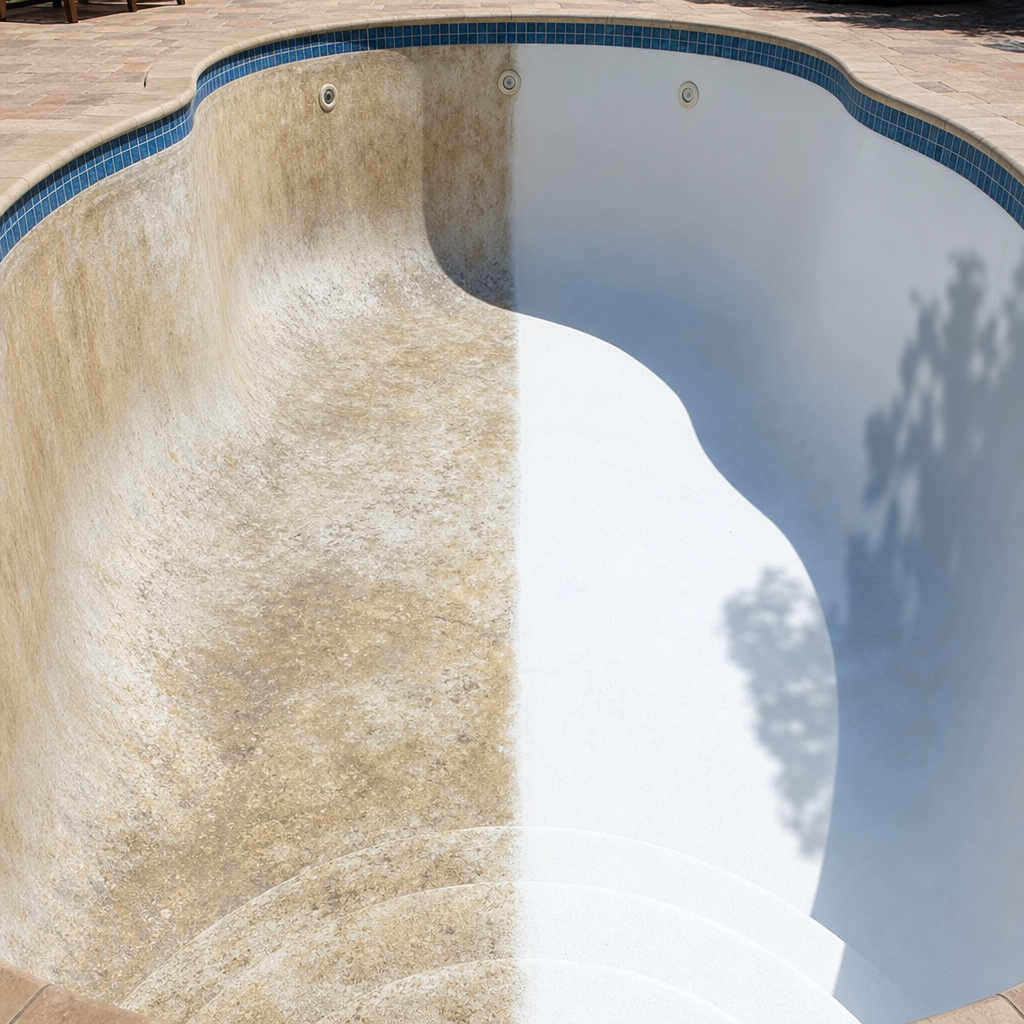
A pool acid wash in Mesa costs $300–$800 for most residential pools and involves draining the pool completely, washing the bare plaster with a controlled muriatic-acid solution to strip off stains, calcium, and algae, then a neutralizing chlorine bath and refill. It reveals the fresh white surface hiding under years of staining. Send a photo for a flat quote.
An acid wash is the deepest restoration you can do to a pool surface short of replastering. It’s not weekly cleaning and it’s not a chemical treatment you pour in. It’s a hands-on job where the pool is empty and someone is down in the shell working acid across the plaster. When it’s done right, a gray, mottled, stained pool comes back looking close to new. When it’s done wrong, you can permanently etch the plaster. This page walks through exactly how it should be done and when it’s the right call.
When a Mesa pool needs an acid wash
You’re probably a candidate if your drained or clear pool shows any of these:
- Dingy, gray, or mottled plaster that won’t brush clean.
- Stubborn stains: iron and copper from the hard water, sunscreen and body-oil rings, organic stains from leaves and monsoon debris.
- A chalky calcium band at the waterline (Mesa’s extremely hard water plates calcium fast, see calcium and scale removal).
- A pool that was green and, once cleaned, has algae staining ground into the plaster.
- Prep for resurfacing: an old surface gets acid-etched so a new coat bonds (that’s resurfacing prep).
If your pool is currently a green swamp, start with green pool cleanup; an acid wash often follows once the water’s out and the surface is visible.
The process, step by step
This is described in detail because the details are the whole job. A careful acid wash and a careless one cost about the same in acid. The difference is entirely in method.
- Drain the pool to the right place. In Mesa, pool water should go onto your own landscaping or into your on-lot sewer cleanout; the city says draining to the street or a storm drain may violate Mesa City Code 8-6-3. Draining to the correct point keeps you clear of a code notice. Draining also gets timed so a hollow fiberglass or high-water-table situation doesn’t pop the shell.
- Let the surface reveal itself. Once empty, the true condition of the plaster shows: stains, scale, thin spots. This is where the photo quote gets confirmed and, if the plaster’s too thin, where we tell you it’s a resurfacing job, not another wash.
- Wet the walls and work in sections. The plaster is kept wet the whole time. Acid on dry plaster etches unevenly and leaves streaks you can’t undo. Each section is wetted, a muriatic-acid-and-water solution is applied (commonly around a 1:1 up to 1:4 acid-to-water mix depending on stain severity), then scrubbed and rinsed immediately, moving top to bottom so runs don’t streak below.
- Time it for the cool part of the day. In Mesa summer heat, plaster dries fast. The work should happen early or in shade so the surface stays workable and the acid does its job before it flashes off.
- Neutralize and pump out responsibly. The acidic wash water pooling in the deep end gets neutralized with soda ash so it’s not dumped acidic, then pumped out to an approved point.
- Chlorine bath. A strong chlorine wash sanitizes the fresh surface and knocks out any remaining algae spores that would otherwise re-bloom the day you refill.
- Refill and rebalance. The pool is refilled (your city water, your cost) and the chemistry, pH, alkalinity, calcium hardness, chlorine, is brought back into range so a fresh acid-washed surface doesn’t immediately start re-staining or scaling.
The honest limit on acid washing
Here’s the part most companies won’t put in writing: every acid wash removes a thin layer of plaster. That’s the mechanism, it etches off the stained top and exposes clean material underneath. But a plaster shell is only so thick. Most pools can take a handful of acid washes across their life. Push past that and the plaster gets thin enough that the gray gunite or the aggregate underneath starts showing through, and no amount of acid fixes that, only a new surface does.
So we read your plaster and tell you where you stand. If you’ve got thickness to spare, a wash is the right, affordable call, hundreds of dollars against the thousands a replaster runs. If you’re near the end, the honest move is resurfacing prep, not a wash that shortens the surface’s remaining life for one invoice.
Plaster, Pebble Tec, quartz: does surface type matter?
Yes, and it’s worth naming your surface with the photo. Classic white plaster (marcite) is the most common shell in Mesa’s older neighborhoods and responds exactly as described above. Pebble Tec and other exposed-aggregate finishes handle acid well. An acid wash is actually how a dulled, calcium-hazed pebble surface gets its stone color back. Quartz finishes sit in between and wash fine with the standard method. The one exception is fiberglass: the gelcoat should never be acid washed, and a fiberglass pool that looks stained or chalky needs a different (gentler) restoration approach. If you’re not sure what surface you have, the photo usually shows it.
Why Mesa pools stain in the first place
Two forces: hard water and sun. Mesa’s tap water averages about 16 grains per gallon of hardness by the city’s own water quality report, well into the “very hard” range, so calcium and metals are constantly plating onto the surface, especially as summer evaporation concentrates them. And a lot of Mesa plaster is old. Neighborhoods like Dobson Ranch and Sunland Village were built in the 70s and 80s, and older plaster is more porous and stains more readily than a fresh coat. That combination is why acid washing is so much more common here than in soft-water parts of the country.
What it costs and how quotes work
| Pool | Typical acid wash |
|---|---|
| Standard residential plaster pool | $300–$800 |
| Large or heavily stained pool | $700–$1,200+ |
| Refill water (owner’s cost) | roughly $60–$200 on your city bill |
Quotes are flat from a photo, with no hourly meter. Size and stain severity move the number; access is minor. See the full pricing breakdown for what’s in and out of the price. Send a photo of the waterline and the worst staining, plus rough size and your cross streets, and we will come back with a number and a timeline.
We acid wash pools across Mesa and the East Valley, Gilbert, Chandler, Tempe, and Apache Junction. Confirm the insurance of whoever you hire, us included.
Frequently Asked Questions
How much does a pool acid wash cost in Mesa?
Most residential pools run $300–$800. Larger or heavily stained pools can reach $700–$1,200 or more. Pool size and stain severity are the two big drivers. Send a photo for a flat quote.
How often should I acid wash my pool?
Every 3–5 years for a typical Mesa plaster pool, sooner if it stains heavily or has gone green. It's a periodic restoration, not routine maintenance, and because each wash thins the plaster it can't be repeated forever.
Will an acid wash damage my plaster?
Done correctly, no, it removes only a thin, stained top layer. Done wrong (acid too strong, plaster allowed to dry mid-wash), it can etch permanently. That's why we keep the surface wet and work in sections, and why you should ask any company, us included, for proof of insurance.
Can every stain be removed?
Most organic, sunscreen, and light metal stains come off with the top plaster layer. Some deep metal stains only lighten. Expect an honest read from the photo, not a promise that a stain will vanish.
How long does an acid wash take?
Usually 1–2 days on-site plus refill time. The acid should be worked in the cooler part of the day so the plaster etches evenly, followed by neutralizing, refilling, and rebalancing.
Can you acid wash a Pebble Tec or quartz pool? What about fiberglass?
Pebble and quartz aggregate surfaces take an acid wash well. It's actually how a dulled pebble finish gets its color back. Fiberglass is different: the gelcoat should not be acid washed, and those pools get a different cleaning approach. Mention your surface type with the photo so the quote covers the right process.
I have an attached spa. Should the quote cover both, and what should it list?
Yes, quote them together. A spa that spills into the pool shares its water, so it empties with the pool and is washed on the same visit, and the spa's tile line and spillway lip are often where calcium sits thickest. Ask for a written flat price that names each step: draining and where the water goes, the wash of the pool and the spa, neutralizing and pumping out the acid residue, the refill, and the chemical start-up after it. Filter cleaning is often bundled; if yours was cleaned recently, say so and ask for it to be inspected rather than charged by default. Photos of the plaster, the spa, and any stains are usually enough for a flat number without a site visit.
More pool services
- Green Pool Cleanup in Mesa, Arizona
- Pool Calcium & Scale Removal in Mesa, Arizona
- Pool Tile Cleaning in Mesa, Arizona
- Pool Drain & Clean in Mesa, Arizona
- Pool Resurfacing Prep in Mesa, Arizona
- Green Pool Cleanup in Tempe, Arizona
- Green Pool Cleanup in Chandler, Arizona
- Green Pool Cleanup in Gilbert, Arizona
- Green Pool Cleanup in Apache Junction, Arizona