 Mesa Pool Acid Wash
 Pool Calcium & Scale Removal in Mesa, Arizona
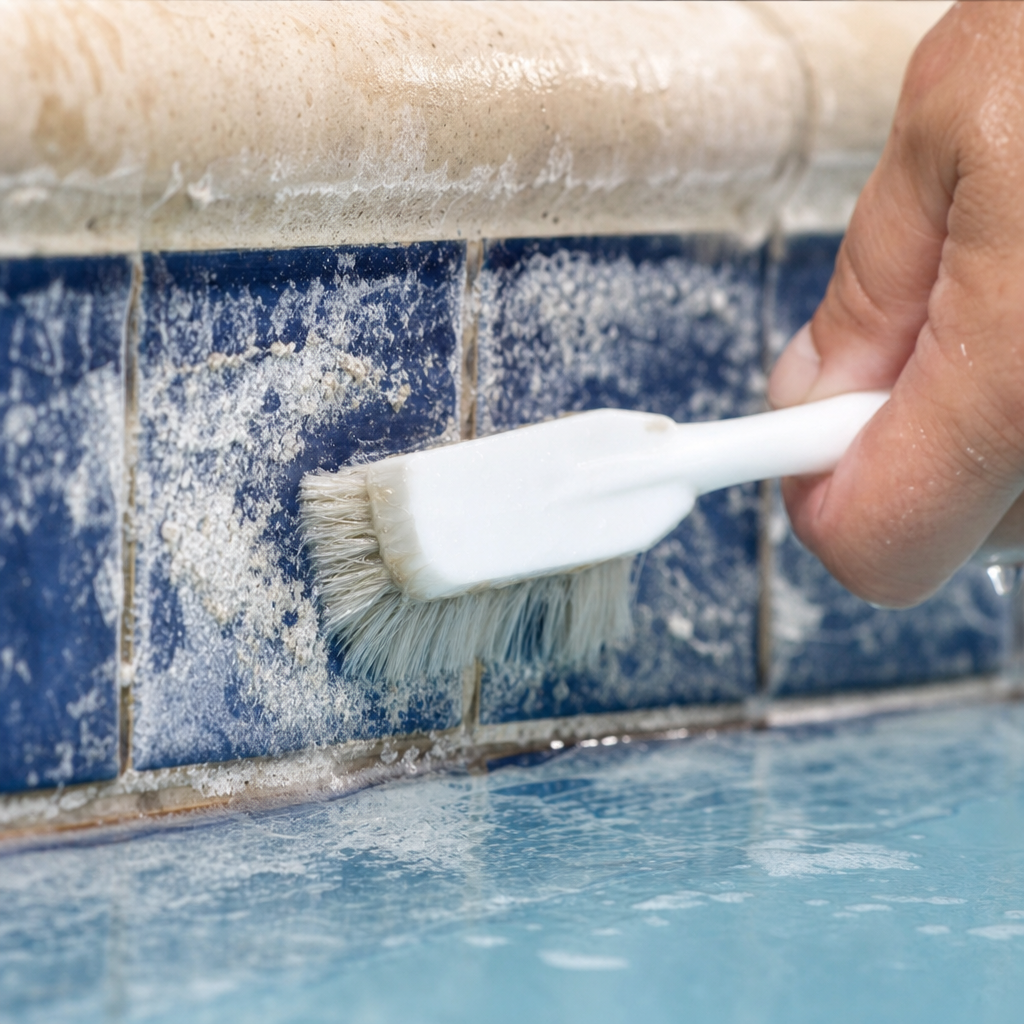
Calcium and scale removal in Mesa typically costs $200–$500 and takes the chalky white hard-water crust off your pool’s waterline tile and plaster using bead blasting, acid treatment, or both. Mesa’s water is among the hardest in the country, so scale here is not a maybe. It’s a when. Send a photo of the tile band for a flat quote.
If your pool has a white or gray crust riding along the waterline tile, or a rough haze creeping across the plaster, that’s calcium scale, and it’s the single most common cosmetic problem on East Valley pools. It doesn’t brush off, it doesn’t dissolve with normal pool chemicals, and it gets harder and thicker the longer it sits. This is a job for the right method and the right media.
Why Mesa pools scale so badly
Mesa’s tap water averages about 16 grains per gallon of hardness by the city’s own water quality report, well into the “very hard” range, and it varies by which mix of surface water and groundwater reaches your zone. Every time your pool evaporates in the summer heat and you top it off, you add more calcium and the water gets more concentrated. Calcium plates out where water meets air, the waterline, as a chalky band, and hazes the plaster over time.
It’s worse on older pools. In neighborhoods like Dobson Ranch, Sunland Village, and the areas near Fiesta, decades of hard-water top-offs have built serious scale. But even newer east-Mesa pebble pools in Las Sendas or Eastmark scale up, the water doesn’t care how new your finish is.
Two kinds of scale, two methods
Getting this right starts with identifying what you actually have:
- Calcium carbonate: the softer, whiter scale. It reacts to acid, so light-to-moderate carbonate can often be dissolved with a controlled acid treatment or knocked off during an acid wash while the pool’s drained.
- Calcium silicate: the harder, grayer, more stubborn scale. Acid barely touches it. This one needs bead blasting, a soft abrasive media fired at the scale to lift it off the tile without pitting the glaze.
Guessing wrong wastes your money. Pour acid at calcium silicate and you’ll get nowhere; bead-blast light carbonate you could’ve dissolved and you’ve paid for the heavy method unnecessarily. Get the scale type identified before the quote.
Bead blasting, explained
For heavy scale, especially on glass or ceramic waterline tile, bead blasting is the gold standard. A specialized machine propels a soft media (glass bead, or a mild abrasive) against the scale. It shatters and lifts the calcium off the tile face and grout lines while leaving the tile itself intact. Because it’s a slower, per-foot process, heavy-calcium bead blasting is priced by the linear foot of tile, a big pool with a long perimeter and thick scale runs toward the top of the range.
The result is dramatic: tile that looked permanently white-crusted comes back to its original color and gloss. It’s the fix when tile cleaning chemicals and pumice have failed. See pool tile cleaning for lighter scale that hasn’t hardened yet.
Acid treatment for plaster scale
When scale has hazed the plaster surface rather than just the tile, the fix is usually part of a full acid wash, the same muriatic-acid strip that removes stains also dissolves carbonate scale off the plaster and reveals fresh surface. If your pool has both a scaled tile band and a hazy plaster surface, combining bead blasting on the tile with an acid wash on the plaster in one drained visit is the efficient way to do it.
Pricing
| Scope | Typical cost |
|---|---|
| Light carbonate scale, tile band | $200–$500 |
| Heavy calcium silicate, bead blasting | priced by linear foot of tile |
| Plaster scale via acid wash | $300–$800 (full acid wash) |
Send a close photo of the waterline tile to find out which scale you have and what it costs. The number should be flat: if bead blasting is what your scale needs, the per-foot cost is built into the quote up front, not discovered on the invoice. Full breakdown on the pricing page.
Keeping it from racing back
With water this hard, scale returns eventually, but how fast is largely up to chemistry. Keeping your calcium hardness and pH in range slows plating a lot; a pool left to evaporate and get topped off with no balancing scales fastest. After the scale comes off, the water should be rebalanced and you should be told what to watch. A rebalanced pool buys you years before you’re back here.
We do calcium and scale removal across Mesa, Gilbert, Chandler, Tempe, and Apache Junction.
Frequently Asked Questions
How much does calcium removal cost in Mesa?
Calcium and scale removal typically runs $200–$500. Heavy calcium that needs bead blasting is priced by the linear foot of waterline tile, so a long perimeter with thick scale costs more. Send a photo of the tile band for a flat quote.
What's the white crust on my pool tile?
Calcium scale. Mesa's tap water averages about 16 grains per gallon of hardness, so as pool water evaporates and you top it off, calcium plates out at the waterline. It's the number-one cosmetic complaint on East Valley pools.
What's the difference between calcium silicate and calcium carbonate?
Calcium carbonate is the softer, whiter scale that acid can usually dissolve. Calcium silicate is a harder, grayer scale that acid barely touches, it typically needs bead blasting. Which one you have should be identified before quoting, because it changes the method and price.
Will removing calcium damage my tile?
Done correctly, no. Bead blasting uses a soft media that lifts scale without pitting the tile, and acid treatment is controlled and rinsed. The risk is in inexperienced hands using the wrong media or leaving acid on too long.
How do I keep the calcium from coming back?
It always returns eventually with water this hard, but keeping your calcium hardness and pH balanced slows it a lot. Ask for a rebalance after the removal and for what to watch. A pool left to evaporate and get topped off without balancing scales fastest.
More pool services
- Pool Acid Wash in Mesa, Arizona
- Green Pool Cleanup in Mesa, Arizona
- Pool Tile Cleaning in Mesa, Arizona
- Pool Drain & Clean in Mesa, Arizona
- Pool Resurfacing Prep in Mesa, Arizona
- Green Pool Cleanup in Tempe, Arizona
- Green Pool Cleanup in Chandler, Arizona
- Green Pool Cleanup in Gilbert, Arizona
- Green Pool Cleanup in Apache Junction, Arizona